
High School Diploma Program for Adult Learners
Course Catalog
American Royal High School provides a complete, flexible online curriculum designed to support adult learners in completing their high school diploma at their own pace. Courses are structured in clear, manageable lessons and focus on real-world relevance, academic growth, and practical skills.This catalog outlines the full range of courses offered at ARHS, including core academic subjects and electives. Your personalized graduation plan will specify which of these courses you need to complete based on any transferable credits.
Graduation Credit Requirements
To earn a high school diploma from American Royal High School, students must complete the following 24 credits:
Core Subject Requirements
English: 4 credits
Mathematics: 4 credits
Science: 4 credits
Social Studies: 4 credits
Electives
Electives: 8 credits
Transferable credits may reduce the number of required courses. Transferred credits also reduce tuition by $30 per credit.

Core Curriculum
If you have access to transcripts, report cards, or other school records, you may upload them during enrollment or email them to our support team. Unofficial copies are acceptable for the initial review, which keeps the process moving without delays. If we need official records later, we will let you know.

English / Language Arts (4 Credits Required)
Strengthens basic reading comprehension, vocabulary, and writing structure. Students learn how to write clear paragraphs, understand main ideas, and build confidence in academic writing. This course is ideal for learners returning to school after a long break.
Introduces short stories, poems, and nonfiction texts while teaching students how to analyze literary elements. Writing assignments focus on organization, clarity, and communicating ideas effectively.
Explores major works in American literature from early writings to modern voices. Students learn how historical context shapes literature and practice evaluating themes, arguments, and viewpoints.
Focuses on modern texts, research skills, and advanced writing techniques. Students complete analytical essays, practice source evaluation, and prepare for college-level communication or workplace writing expectations.
Mathematics (4 Credits Required)
Covers number operations, fractions, decimals, ratios, proportions, and introductory algebraic thinking. Builds the foundation needed for success in Algebra 1.
Teaches linear equations, graphing, inequalities, functions, problem-solving, and systems of equations. This course is essential for students preparing for higher-level math.
Explores shapes, angles, congruence, similarity, area, perimeter, volume, and geometric reasoning. Includes real-world applications such as measurement and spatial problem-solving.
Builds on Algebra 1 concepts through advanced functions, polynomials, quadratics, complex numbers, exponential equations, and real-world modeling. Prepares students for college-level math or practical workplace math.


Science (4 Credits Required)
Introduces Earth’s structure, geology, weather patterns, oceans, climate, and environmental processes. Lessons use relatable examples to make scientific concepts easy to understand.
Covers basic chemistry and physics, including matter, energy, motion, waves, temperature, and simple machines. Helps students understand how scientific principles appear in daily life.
Explores cells, genetics, evolution, ecosystems, human anatomy, and living systems. Offers a balanced mix of scientific knowledge and practical understanding of the natural world.
Focuses on ecosystems, sustainability, human impact, renewable resources, and environmental problem-solving. Ideal for students interested in conservation and real-world environmental issues.
Social Studies (4 Credits Required)
Covers ancient civilizations, cultural development, global conflicts, social systems, and major events that shaped the world. Students understand how societies evolve and influence each other.
Follows the development of the United States from early colonization to modern times. Includes the Constitution, civil rights, wars, industrialization, and cultural movements.
Explains how the U.S. government works, including branches, elections, laws, citizenship, and civic responsibility. Helps students understand their role in society and how government decisions are made.
Covers personal finance, economic systems, supply and demand, markets, entrepreneurship, and financial planning. Includes practical guidance on budgeting, banking, and making financial decisions.

Elective Courses (8 Credit Required)
Electives allow students to explore interests, develop life skills, and strengthen career readiness.
Personal Development & Life Skills Electives
Teaches budgeting, saving, credit scores, loans, taxes, and financial decision-making. Provides practical skills adults can begin using immediately.
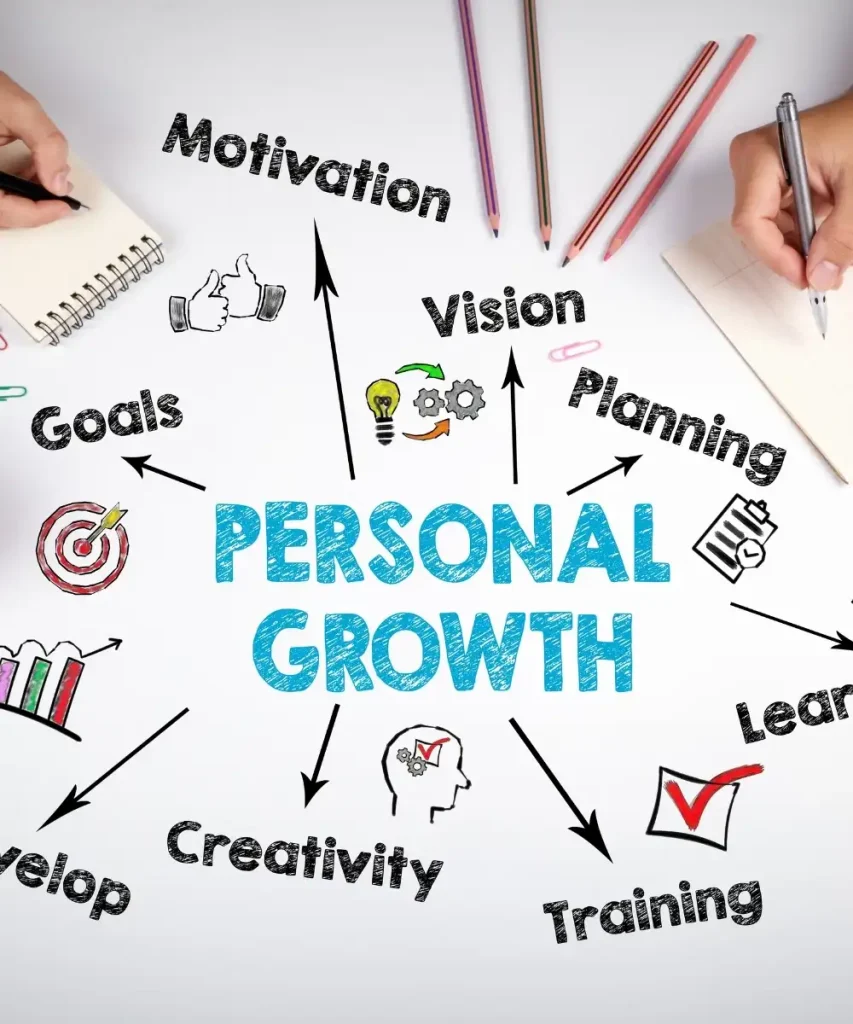
Covers communication, emotional resilience, conflict resolution, time management, organization, and goal setting. Helps students balance responsibilities and reduce stress.
Explores mental health, nutrition, physical activity, stress management, and personal well-being. Designed to support lifelong healthy habits.
Guides students through identifying career paths, writing resumes, preparing for interviews, and understanding college or training program admissions.

Digital & Technology Electives
Covers basic computer use, file management, email, online communication, and digital safety. Designed for students who want to build comfort with everyday technology.
Teaches practical tech use such as cloud tools, online forms, video calls, document creation, and navigating digital systems used in most workplaces.
Improves typing accuracy and speed through guided practice. Useful for students preparing for office jobs or online coursework.
Carrer & Workforce Electives
Helps students identify strengths, research career options, understand job requirements, and plan for professional growth.
Introduces business communication, workplace professionalism, customer service, team dynamics, and basic business operations.
Covers brainstorming business ideas, understanding markets, simple budgeting, planning, and essential concepts for starting a small business.


Additional Electives
Explores artistic styles, visual elements, major artists, and cultural meaning behind artwork.
Studies social groups, culture, family systems, communication, social issues, and how people interact within society.
Course Format and Learning Experience
All ARHS courses include:
Short, easy-to-follow lessons
Practice activities
Quizzes and assessments
Progress tracking
Supportive guidance when needed
Lessons are written in clear, approachable language, specifically with adult learners in mind. All coursework is completed online at your own pace, with all digital resources included in the tuition.
Transfer Credit Policy
Students who have completed previous high school coursework may transfer eligible credits into ARHS. Each transferable credit:
Reduces the number of courses you must complete
Reduces tuition by $30 per credit
Helps you graduate faster
Our team carefully evaluates all transcripts to ensure accuracy and fairness.

More About Us
Getting Started
After enrollment, you will receive:
Your personalized graduation plan
A list of required courses
Any transfer credits that have been applied
Your login credentials
Instructions for starting your first course
Many students discover they are much closer to earning their diploma than they thought.